




Patagonian Ice Field
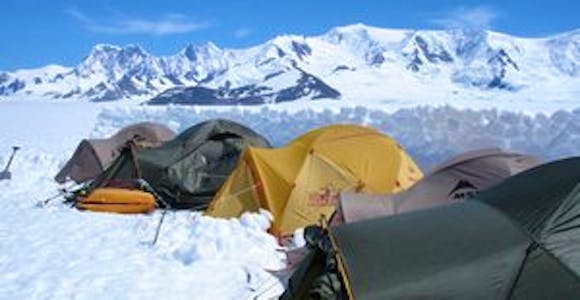
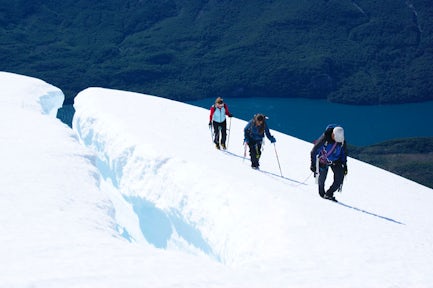
If you're in good shape, keen to don ice-axe, crampons and snowshoes and aching to get deep into the Patagonian Wilderness, then this is the one for you. The South Patagonian …
Discover More
Patagonia is rich with mountaineering opportunities; from striking peaks and famous mountain ranges to ice fields and glaciers, which stretch from the Andes towards the Atlantic Ocean as far as the Strait of Magellan in southernmost Patagonia. Discover the best ascents on both the Argentinian and Chilean side of the region, which draw mountaineers in from around the world each year.
Perhaps you've climbed some high peaks in your native country. You might have summited Kilimanjaro, or had a taste of some ice climbing, and are now looking to tackle a summit in the Andes. There are some great introductory peaks near Bariloche in the Lake District, and near El Chalten in Los Glaciares National Park. It is even possible to combine both of these areas into one trip. See below for some different options.
Located near San Martin de Los Andes in the Argentinian Lake District, summiting this volcano rewards you with some breathtaking views. You can tackle Lanin between December and April (or possibly July-October as part of a ski touring trip - see bottom of page).
It can be summited in 2 days, plus 2 days of travel to/from San Martin de los Andes.
This beautifully formed cone-shaped volcano is still active. Many compare its appearance to Mount Fuji. Its upper slopes are almost entirely covered in glaciers so previous experience climbing this terrain is advisable. It can be summited in 1-day with a good weather window.
The town of Puerto Montt, in the Chilean Lake District, makes the perfect base for climbing the Osorno Volcano.

The second highest peak in Patagonian lies in a beautiful and remote area on the Chile-Argentina border accessed from Cochrane in the Aysen region of Chile.
Summiting San Lorenzo involves 5 days on the mountain and 2 days of travel from and to Balmaceda airport.
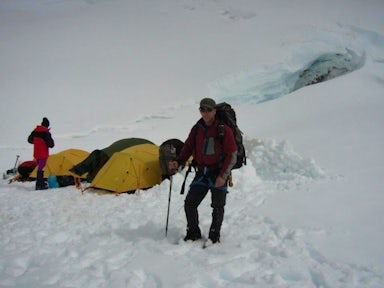
Sitting on the edge of the South Patagonian Ice Cap, summiting Gorra Blanca presents incredible views across this huge mass of ice.
It's a demanding 2-day hike out, first ascending the Marconi glacier and then a day for the summit itself. In total, you will need 6 days out of El Chalten. This could potentially be combined with an Ice Cap expedition.
It is a wonderful way to adventurously explore Southern Patagonia.
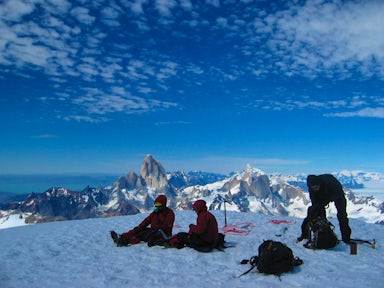
Tronador lies in the heart of Nahuel Huapi National Park and is accessed via Pampa Linda, a short drive from San Carlos de Bariloche.
Tronador means 'thunderer' and that really is the sound you hear on approach, as ice calves off the one of the eight glaciers into a natural amphitheatre below.
Summiting Cerro Tronador usually involves a 3-day expedition, summitting on Day 2, and using the Meiling mountain hut on the first and second nights. There are actually a few different peaks on Tronador and for introductory/intermediate trips you'd tackle the 'Pico Argentino' at 3,187m.
An isolated peak rising in close proximity to the town of El Chalten where it can be easily accessed from.
Summiting Cerro Solo rewards you with spectacular views of Mount Fitz Roy and Cerro Torre.
It's normally a 3-day ascent. Access to this glaciated peak is via a great day of hiking out of El Chalten and around Mount FitzRoy. You'll check gear and practice your skills on the Torre Glacier (which is a great destination in itself).
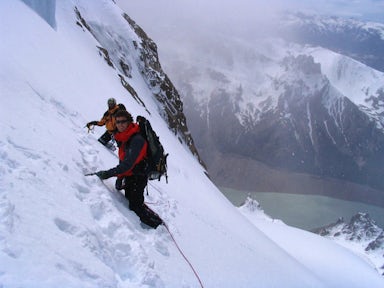
This peak can be climbed in a day from El Chalten and has possibly the best view, which takes in Mount Fitz Roy and also encompasses the Southern Ice Field. The climb takes about 6 hours and involves a glacier traverse. Some experience using an ice axe and crampons will help you reach the summit with more ease however the climb can be used as a good introduction to glacier-level climbing.



Want to include Mountaineering in Patagonia in a 2-3 week itinerary? We know Patagonia inside out and can help craft your dream adventure.
Design My Trip


Want to speak to a Mountaineering in Patagonia guide in Patagonia? We have a network of over 200 specialist guides, only a few clicks away.
Introduce Me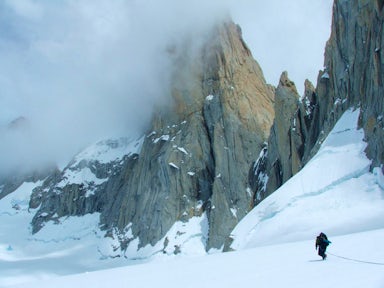
The Andes has plenty to offer for the experienced climber/mountaineer but if you're ready for the next step then our guides can support you on the following:
San Valentin (4,085m)
The highest peak in Patagonia lies in Chile on the Northern Ice Cap. San Valentin is a challenging peak to get to and an expedition can take up to 3 weeks. Although not technically challenging you need to be mentally strong because of the powerful winds that can keep you tent-bound for days at a time. If you are looking to conquer the ultimate Patagonian peak then this is it. San Valentin can be accessed from Lago San Rafael or Lago General Carrera.
North Tower of Paine (2,260m)
Set in the heart of Torres del Paine National Park are three gigantic granite peaks and one of these peaks gives the park its name. You should allow 10 days for this ascent, 4 days to get in/out and 6 for the best weather window.
Guillaumet (600m)
Next to Mount Fitz Roy, there is a 600m climbing route with pitches from 5.4 to 5.9 and a pitch of 5.10b. You should allow 6-7 days including time to review your skills and wait for the right weather window.
Please get in contact and one of our Patagonian specialists can tell you more about the mountain ranges of Argentina and Chile, or our advanced climbing trips.
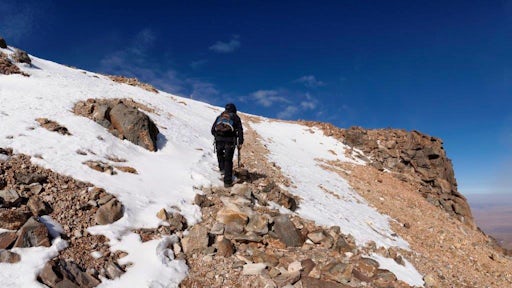
For those who don't have the time for Aconcagua, but still want to get into the high Andes, there a number of other high altitude but non-technical options in Chile and Argentina:
Ojos de Salado (6,920m)
The highest active volcano in the world, situated in the Atacama Desert. It is also the second-highest mountain in the Western Hemisphere. It is located 600km north of Aconcagua. This is mostly a strenuous hike on dry rubble with the final section of the summit possibly requiring some ropework.
Volcan Parinacota (6,330m)
A dormant stratovolcano on the border of Chile and Bolivia. This is an Alpine F grade on a snow/rubble slope of about 35 degrees
Licancabur (5,916m)
Located in the same region as Volcan Parinacota, this near-perfect stratovolcano is not technically challenging but the sheer altitude and impressiveness of it makes it a worthwhile climb
Lascar (5,400m)
The most active volcano in the northern Chilean Andes last erupted in 1993 producing ashfall as far wide as Buenos Aires.
If you're in good shape, keen to don ice-axe, crampons and snowshoes and aching to get deep into the Patagonian Wilderness, then this is the one for you. The South Patagonian …
Discover More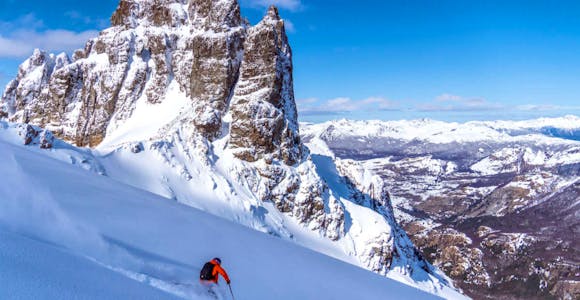
There are plenty of ski touring opportunities on Patagonia's volcanoes, on the Ice Cap and in popular resort's backcountry. Bariloche and Nahuel Huapi National Park are two …
Discover MoreImpartial advice and a bespoke service to make your trip perfect.
We are former guides, tour leaders, outdoor enthusiasts & adventurers.
Swoop is proud to be B Corp Certified as we know sustainability is more than our carbon footprint (but we’re reducing that too).
We’ll make sure you have the adventure of a lifetime.
We'll spend some time listening to your aspirations, then discuss the kind of experience that might suit you.
Next we'll discuss the options, shortlist the best trips for you and present you our impartial recommendations.
We'll place a 24 hour hold on your preferred option - without obligation - whilst we talk through the details.









Whatever your budget, group size, length of stay, preferred activity or appetite for adventure, we can help.
1-855-369-7866


